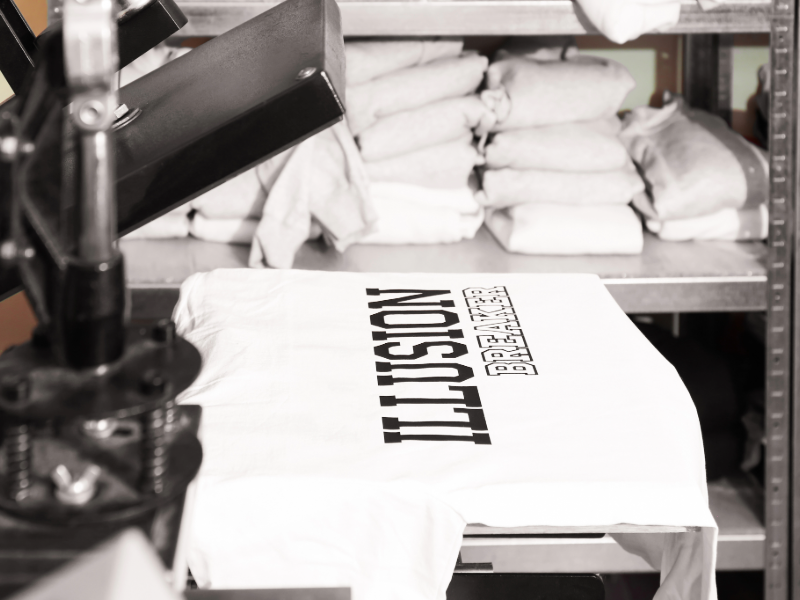
Long before custom T-shirts became a way to represent a brand, celebrate an event, promote a business, or simply show off your personal style, people were using early forms of printing to transfer designs onto different surfaces.
Today, screen printing is one of the most recognizable and dependable methods for creating custom apparel. But the technique didn't begin with T-shirts—or even in the United States. Its history stretches back centuries and crosses cultures, continents, art movements, and industries. At The Kustom King of Dallas, we believe every great design tells a story. So, let's take a look at the story behind the process that helped turn ordinary clothing into wearable art.
At The Kustom King of Dallas, we believe every great design tells a story.
Where Did Screen Printing Begin?
The roots of screen printing can be traced back hundreds of years to Asia. Early stencil-printing techniques were used in China, with artisans developing methods for transferring intricate designs onto fabric and other materials. Similar techniques later became highly developed in Japan, where craftspeople used elaborate stencils and mesh-like supports to create detailed patterns on textiles. These early processes established the basic principle that still defines screen printing today: use a stencil to control where ink or dye passes through onto the surface below.The technology has changed dramatically, but that fundamental idea remains surprisingly similar.
Screen Printing Comes to the West
As international trade expanded, Asian printing techniques gradually made their way into Europe. By the 18th and 19th centuries, stencil-based printing was increasingly being used for decorating fabrics, wallpaper, furnishings, and other products.One important development was the use of silk mesh as the screen material. This helped give the process one of its traditional names: silk-screen printing. A stencil could be applied to the screen so that certain areas remained open while others were blocked. Ink was then pushed across the screen and through the open areas, transferring the image onto the material underneath.Sound familiar? That's because the same basic concept remains at the heart of modern screen printing.
The Birth of Modern Screen Printing
Screen printing took a major step forward during the early 20th century. Printers began developing more sophisticated stencil techniques and adapting the process for commercial production. In the United States, patents and innovations involving screen-based printing helped transform the method from a traditional craft into a practical commercial printing process. This opened the door for businesses to reproduce designs more consistently and efficiently. Screen printing began appearing on signs, advertisements, posters, textiles, product labels, displays, and eventually clothing. But the story was just getting started.
When Screen Printing Became Art
By the mid-20th century, screen printing had moved far beyond purely commercial applications. Artists recognized that the technique could be used to reproduce bold images, experiment with color, and transform familiar imagery into something completely new. One of the most famous examples was Andy Warhol, whose screen-printed works became closely associated with the Pop Art movement of the 1960s. Warhol's famous images demonstrated something screen printers already understood: Repetition doesn't have to mean boring. Changing colors, layering images, altering placement, and experimenting with composition could turn the same basic image into entirely different works of art. That creative freedom remains one of the reasons screen printing works so well for custom apparel today.
The Kustom King of Dallas — where your vision becomes wearable art.
The Rise of the Printed T-Shirt
The T-shirt started as a simple piece of clothing, but by the middle of the 20th century, it was becoming something much bigger. Businesses realized shirts could become walking advertisements. Organizations used them to promote causes. Bands turned them into merchandise. Schools and sports teams used them to create identity and unity. Eventually, people began wearing shirts to express everything from humor and music preferences to hometown pride and personal beliefs. Screen printing was perfectly suited for the movement. It allowed printers to produce bold graphics with strong colors on large quantities of shirts while maintaining a consistent design. The T-shirt had officially become a canvas.
How Modern Screen Printing Works
Today's screen-printing equipment is far more advanced than the early methods used centuries ago, but the basic principle remains remarkably familiar. A design is separated into individual colors. A stencil is created for each color and applied to a mesh screen. Ink is pushed through the open portions of the screen onto the garment, typically using a squeegee. For designs containing multiple colors, separate screens are generally used and carefully aligned so that the individual colors combine to create the finished artwork. The garment then goes through a curing process that helps the ink properly set. The result? A bold, durable design that can withstand regular wear when printed and cured correctly.
Why Screen Printing Is Still Popular
With digital printing, direct-to-garment technology, embroidery, heat transfers, and other decoration methods now available, you might wonder why screen printing continues to be so popular. The answer is simple: it works. Screen printing is especially well suited for designs that call for vibrant colors, strong graphics, durability, and larger production runs. It's commonly used for:
- Business and company shirts
- School and team apparel
- Family reunions
- Church and community events
- Concert and band merchandise
- Brand merchandise
- Fundraisers
- Clubs and organizations
- Special events
- Fashion collections
- Custom streetwear
And, of course, sometimes you don't need an event or business at all. Sometimes you simply have an idea that deserves to become a shirt.
A T-shirt is no longer just something you wear. It's wearable art.
From Printing Technique to Personal Expression
Perhaps the most interesting part of screen printing's history isn't how the equipment changed. It's how the purpose of printed clothing changed.
- It can advertise a business.
- Represent a neighborhood.
- Celebrate a family.
- Promote a cause.
- Remember an event.
- Support a team.
- Launch a brand.
- Or say something about you before you ever say a word.
- That's what makes custom apparel powerful.
Keeping the Tradition Alive in Dallas
Centuries after artisans began experimenting with stencils and fabric, the basic idea behind screen printing is still going strong. Only now, those designs can start with a sketch, logo, photograph, digital illustration, business concept, or an idea someone has been carrying around in their head.
At The Kustom King of Dallas, that's where the fun begins.
We take ideas and turn them into custom apparel designed to get noticed. Whether you're creating shirts for your business, organization, event, family, brand, team, or yourself, your design should feel like more than ink on fabric. It should make a statement. Because after hundreds of years of printing innovation, one thing hasn't changed: Great designs were made to be seen. Ready to Create Something Kustom? Have an idea for a custom shirt? Contact the Kustom King of Dallas today!